
How to Search the McIntyre Court Docket
The McIntyre court docket has no online docket search from the city. There is no court calendar or payment form either. That absence proves nothing about whether a municipal court exists here. It just means the search starts elsewhere. Work from the citation, notice, or agency named on the McIntyre record. Do not guess at a web address. Keep the full citation or case number handy. Note the date range, the type of violation alleged, and the issuing agency. Those details make the clerk's job, and yours, much easier.
- Read the notice and identify McIntyre, Wilkinson County, or Superior Court as the filing venue.
- Call McIntyre City Hall and ask which clerk keeps the cited city matter.
- Give the clerk the exact number and request the charge, status, and next setting.
- For county or Superior matters, contact the correct Wilkinson County clerk instead.
- Confirm the McIntyre court date again before travel or payment.
McIntyre Railroad Street Record Route
An ordinance notice that does not name a separate clerk points back to City Hall. The official McIntyre site lists City Hall at 102 Railroad Street, McIntyre, GA 31054. The phone number is 478-946-2037. Call and ask who keeps the McIntyre court docket. Ask whether you can inspect it in person, and whether your request should go to a court clerk, the city attorney, or another office. The official page shows the public contact route, though it offers no case index.
The official page backs up the city's contact details, nothing more. It is not evidence of an online McIntyre court docket.
The McIntyre Municipal Court
Georgia municipal courts can hear city ordinance and traffic matters within their lawful jurisdiction. The city's own pages name no judge. They list no docket day, searchable case system, payment form, or public search fields. Contacting McIntyre police is not the same as contacting the docket's custodian. Ask the city clerk to identify the right office before sending any record request.
Silence in a Wilkinson Superior Court search is not a McIntyre result. A city citation can sit entirely outside that system. County traffic citations may belong to Probate Court. Warrants and small civil claims may sit with Magistrate Court. The paper itself, not guesswork, is your best routing clue.
McIntyre Station No. 16 Timeline
Old civic records can be tricky to place, and the official McIntyre history helps there. It traces Station No. 16, the railroad and depot development, post-office history, and incorporation in 1910. It also covers the move to the Railroad Street city hall built in 1988. Useful as that timeline is for identifying the city in older filings, it says nothing about a current hearing date. It names no court rule either. The history page itself shows only the municipal past.
The history page offers a records trail through McIntyre's past. It is no substitute for a current McIntyre court docket.
McIntyre Court Docket Dates and Settings
The city publishes no dependable McIntyre calendar. Take your date straight from the citation or from the clerk who holds it. Ask what kind of setting it is. It may be an arraignment, hearing, trial, compliance review, or general docket call. One caution matters here. A listed setting is a schedule entry, not a result. Resets happen. An old McIntyre entry can stay visible in the record while a newer notice actually controls.
| Date | Current McIntyre setting, including any reset date |
|---|---|
| Time | Arrival time and whether a shared docket call occurs |
| Location | Exact building and room confirmed by the McIntyre custodian |
| Case ID | Citation or case number used by McIntyre |
| Setting Type | Arraignment, hearing, trial, or compliance event |
McIntyre Population in the County Map
The Census incorporated-place table lists McIntyre with a 2020 population of 575. It ranks the place for this project. It measures nothing about McIntyre court filings, settings, or outcomes.
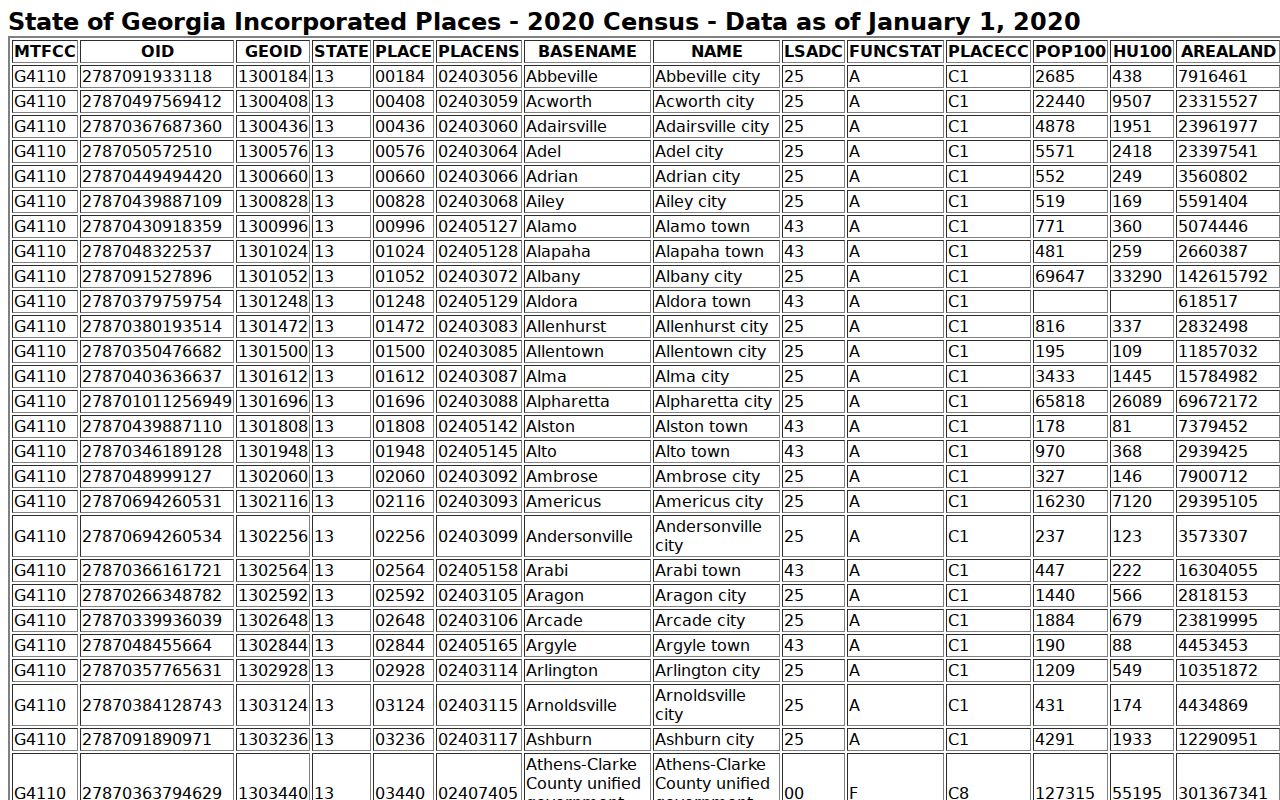
The Census view provides scale while leaving docket facts to the McIntyre custodian.
McIntyre Court Docket Traffic Tickets
Route a McIntyre ticket by the court printed on the citation. Never go by the city name alone. If McIntyre is named as the court, call City Hall. Ask for the current clerk, the search method, and hearing instructions. If Wilkinson County Probate Court is named, take the county traffic route instead. EZCourtPay accepts a date of birth plus a citation number or last name. But remember it is a county citation tool, not proof of any McIntyre city docket. Always ask before paying. Payment and contest procedures carry different consequences and deadlines. The county-wide distinctions are laid out in Wilkinson County traffic court records. For McIntyre-specific terms, rely only on the city's own custodian.
McIntyre Ordinance History Caveat
The history page quotes 1910 authority letting the mayor try ordinance offenders. It also lists a period penalty. Treat that as historical text only. It is not a safe guide to current McIntyre procedure or punishment, so confirm today's jurisdiction, judge, fines, and hearing practice with the city. The official city site also links council minutes, agendas, the code, the charter, and resolutions. Those files can shed light on municipal policy. None of them replaces a case register, a filed judgment, or a certified McIntyre court record. It is simply history on the page.
Where McIntyre Court Docket Cases End Up
A McIntyre ordinance or city traffic matter may begin with a municipal custodian. County traffic and probate matters run through the Probate or Magistrate operation instead. So do warrants, first appearances, and small civil claims. Felonies and major civil or domestic cases belong to Wilkinson County Superior Court in the Ocmulgee Judicial Circuit. Its records are kept by Kim Bentley's office.
Docket flow: McIntyre Municipal Court › Wilkinson County Courts › Georgia Superior Court, Wilkinson County
Those routes describe higher court paths, not an automatic transfer of every McIntyre case. Search the venue actually named in your McIntyre record. The Wilkinson County court docket explains the county-level offices, but reading it will not turn a McIntyre citation into a Superior case.
Requesting a McIntyre Docket Record
Keep the request narrow. A precise ask routes faster than a demand for every McIntyre record the city holds. Name the court or issuing agency, the citation or case number, and the approximate date. Say which record type you want. State whether you need to inspect it, get an electronic copy, or have it certified. If a name is required, give only what the McIntyre custodian needs. That is enough to locate the public matter.
Georgia Attorney General guidance points requests to that custodian and favors putting them in writing. If material is withheld, ask for the legal basis. Leave protected identifiers out of the request entirely. Should McIntyre City Hall redirect you, write down the office name. Then resend the same narrow scope.
The McIntyre site carries council minutes, agendas, ordinances, charter material, and resolutions. Those documents show when the city adopted a rule or took administrative action. They cannot prove what happened in a particular court case. So name the exact case record you want. That could be a public docket entry, a setting notice, a filed order, or a certified disposition. That helps staff pull your request out of the broader municipal library.
Missing the citation number is not fatal. Give the issuing agency, the approximate date, and a short search range. Then ask which fields McIntyre uses to index municipal matters. McIntyre publishes no local number format, so do not strip punctuation or invent a prefix. Once staff locates the matter, confirm the current status and the most recent setting. Also ask whether a later reset supersedes the paper you hold.
McIntyre Charter and Case Records
McIntyre's charter and code describe municipal authority in broad strokes. Council minutes and resolutions record what the government did. A court docket does different work. It follows a filed matter through its settings to disposition. Searching the document library may help you decode an ordinance citation. It cannot show that the cited person appeared or that a judge entered a result.
Handle the historical account of the 1910 ordinance power with care. Its stated penalty belongs to the city's past, not to any current fine schedule. Ask the McIntyre custodian for the current ordinance reference. Ask also for the present procedure and the exact public case record. That step keeps an old charter narrative from being mistaken for live court instructions in a Wilkinson County matter.
McIntyre Calendar Reading Limits
McIntyre posts no dependable municipal calendar. If a clerk gives you a setting, ask what kind it is: arraignment, trial, compliance hearing, or a shared docket call. A calendar listing shows planned court activity only, never the outcome. A case can be reset, continued, dismissed, or resolved after that list was prepared.
Confirm the building and room along with the time. McIntyre's history references older and newer city-hall locations, so a fresh location check pays off. The current city contact at 102 Railroad Street is a starting point. It is not automatic proof that every hearing happens there.
Keep the clerk's confirmation with your McIntyre citation number. If the date moves, ask whether a new written notice or docket entry exists. That record beats a calendar copied from an earlier call, and it stops a historical city-hall reference from turning into current court instruction. Jot down the contact date as well.
Public Access to McIntyre Court Records
Public access starts with the McIntyre custodian. Not every field or document opens up, though. Redacted identifiers, sealed material, and legally restricted records stay outside ordinary inspection. A free McIntyre docket entry is not a certified judgment either. Ask which office can issue the exact form you need.
Key rules: Georgia Open Records Act guidance directs a request to the McIntyre record custodian and explains the usual three-business-day response framework.
Uniform Superior Court Rule 21 starts with public court-file access but permits lawful limits and court orders.